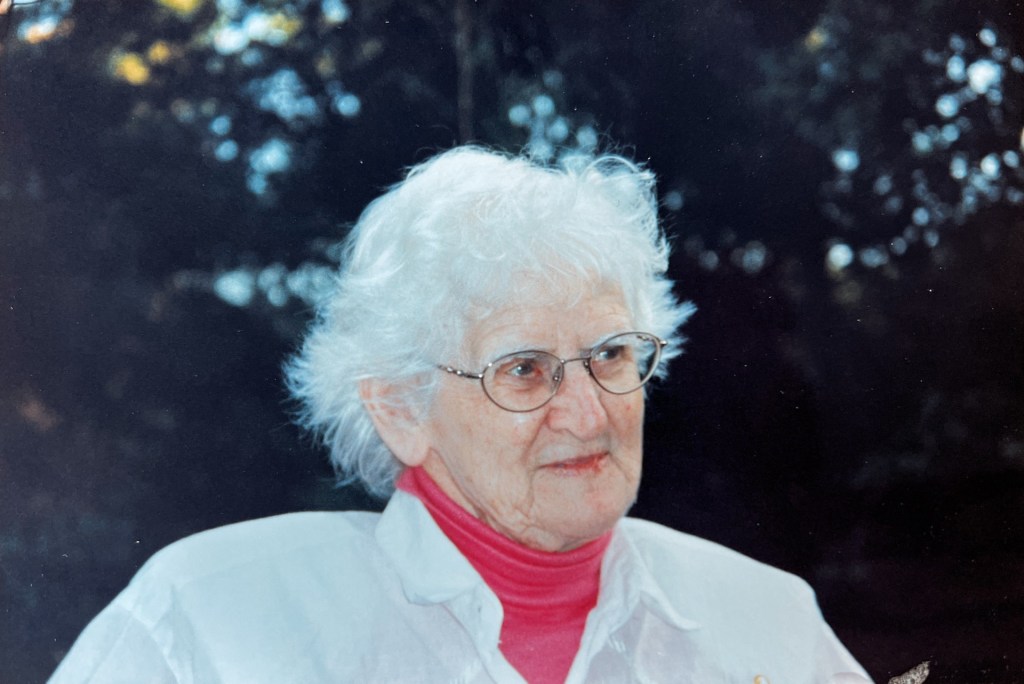
Margaret Erwyd Terry was born on 18 August 1918 at Hurstville New South Wales, the eldest daughter of Frank Terry and Gwen Davies.
For the majority of her childhood Margaret lived at 29 Neirbo Avenue Hurstville, a short distance from the home of her Welsh immigrant grandparents Richard and Maggie Davies. Margaret adored her grandfather, a Presbyterian Minister. She was given his second name, Erwyd, a Welsh placename, as her second name and she remained a devout Presbyterian all her life.
Margaret had a happy childhood. Her memories included:
… playing in the yard, being upset because Colin put my new pretty glass bangles down the drain, being in bed with measles and being read to. I believe I had chicken pox at age 1. I remember having dolls and becoming friends with the Witts children a couple of doors up, who eventually took me to Tempe School and back at my age 5. I believe the 1st electric train on the Illawarra line came through Tempe while we were there. The Witts showed us how to eat nasturtium leaves in sandwiches.
At the age of twelve Margaret was enrolled at St George Girl’s High School. She was a good student, particularly enjoying German, but her parents would not allow her continue after she completed her Intermediate Certificate. Why is unclear. Her mother had completed High School and had gone on to Teacher’s College, so the family had no issue with girls receiving an education; and while Australia was in the depths of the Depression, her father had a secure job in Local Government and it is unlikely that she was forced to leave for financial reasons. The reason she was given was that her eyesight was too poor to allow her to coninue, which is somewhat difficult to reconcile with the fact that she was sent to Secretarial College to learn shorthand and typing and become a ‘Typiste’. The fact that she was forced to leave school at the age of fifteen rankled with her all her life.
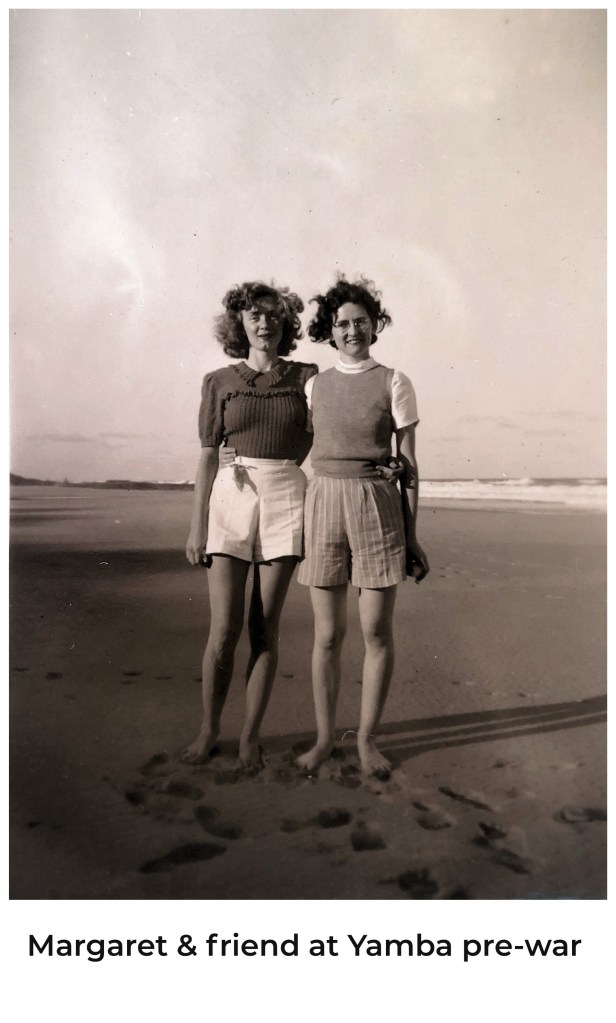
Margaret’s Welsh grandparents died in 1934 and 1939 but apart from that the second half of the 1930s was filled with happy events, mainly revolving mainly around her involvement in a Presbyterian Church Fellowship Group which met weekly, staged entertainments such as Gilbert & Sullivan’s The Mikado and organised excursions to Kiama, Yamba, South Australia and Hobart among other places.
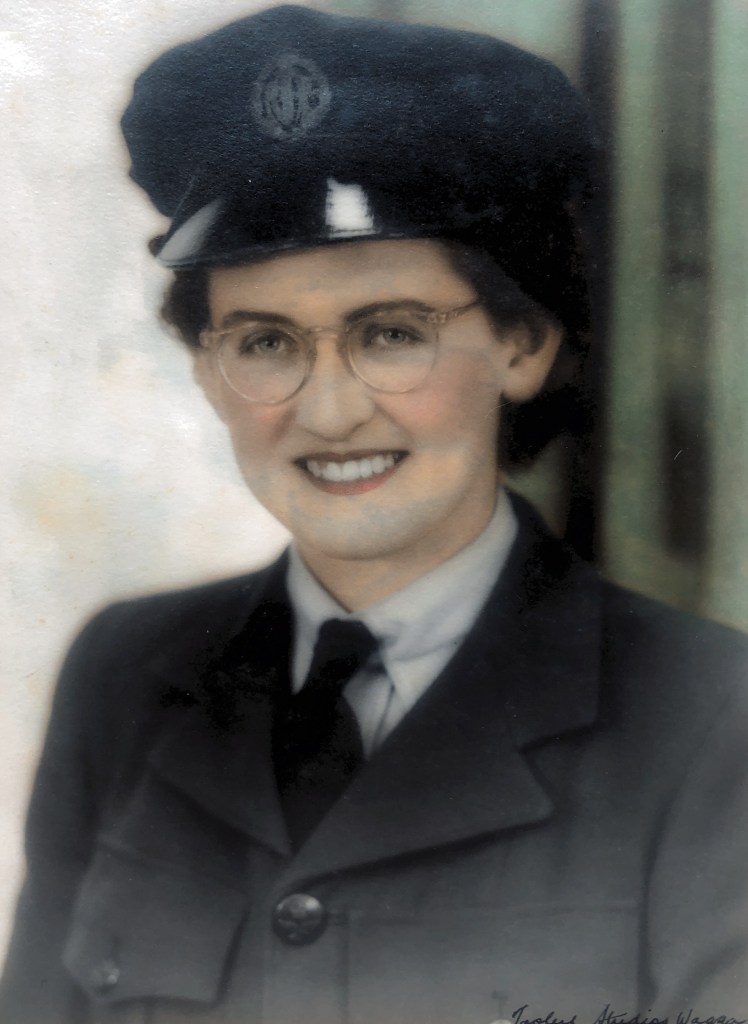
On 3 September 1939 war broke out. Margaret’s brother Colin joined the Army, which must have caused the family a good deal of worry, especially after her father’s brother Bert’s only son, who had joined the Air Force, was killed in 1942 while learning to fly in Scotland. Colin would survive, and patriotism was strong; Margaret’s mother urged her to join up and in November 1943 she joined the Women’s Australian Airforce. After doing basic training in Wagga Wagga in New South Wales she was posted to Greenslopes Hospital in Brisbane as a clerk, where she remained for the rest of the war.
In July 1945, Margaret’s path crossed with that of Vaandrig Marcel Houtzaager, a Dutchman who was passing through Australia with his unit on the way to the Dutch East Indies. They met when Marcel broke his leg while horseriding and became an inmate of Greenslopes Hospital. Love blossomed, but Margaret was discharged in January 1946 and returned to live in Hurstville with her parents and in March 1946 Marcel proceeded to the Celebes (now Sumatra).
Marcel hoped that Margaret would marry him and join him in the Celebes but the Indonesian struggle for independence made that plan untenable and for a while their lives went in different directions. Marcel returned to the Netherlands in 1948 and engaged in further study and Margaret enrolled at a Lady Gowrie Child Care Centre in Erskineville to train as an early childhood teacher. Letters flowed between them and in 1949 Marcel decided to emigrate to Australia. He arrived on the Dutch migrant ship Volendaam in December 1949 and on 3 August 1950 Margaret and Marcel were married at the Presbyterian Church at Kogarah.
Marcel obtained a job as a clerk at Ve-Toy Biscuits in Leichhardt and Margaret’s married life began in a semi-detached home in Petersham, with her first child, Janet, born in nearby Stanmore in 1951. In 1952 Ve-Toy Biscuits opened a factory in Brisbane, Queensland. Marcel transferred there and Margaret’s second child, Richard, was born there in 1953. Not long afterwards Marcel’s father in-law, a Town Clerk, persuaded him to follow in his footsteps and in 1954 Marcel obtained a position at Bankstown Council. The family moved back to Sydney, buying a home in Chester Hill and their third child, Meg, was born in neighbouring Lakemba in 1955. Then in June 1957 Marcel obtained a job with Stroud Shire Council. The family moved to Stroud and their final child, Philip, was born in Gloucester Hospital in 1959. Marcel became the Shire Clerk of Stroud Shire Council and continued in this position for the next thirty years.
Margaret had given up work upon her marriage, as many women then did. In Stroud she became involved in the Presbyterian Women’s Auxiliary and pursued many personal interests. She became a keen photographer, filling slide box after slide box with images of the children and the landscape; she began producing bark paintings; and she became a birdwatcher. Marcel dug up the back yard to plant potatoes, had an extensive vegetable garden and shared his wife’s interset in birdwatching.
In the 1970’s a pre-school was set up at Stroud and Margaret became one of the teachers. She was very proud of this, but Marcel forbade her from accepting a salary; he viewed her work as a community service.
In 1980, Stroud Shire Council became Great Lakes Shire Council and moved it’s headquarters to Forster. Marcel and Margaret, their children all now off their hands, built a home at Smith’s Lake, about half an hour from Forster. Margaret began learning Chinese brushpainting from a local artist and also became intersted in folk art and dabbled in other kinds of painting.
Marcel retired in 1986 and soon after wards Margaret and Marcel embarked on an overseas trip during which they visited the Netherlands, spent time with Marcel’s sister Lous, toured the continent and went to Britain where Margaret spent time in Wales. They also visited their daughter Meg and her husband and children in Hong Kong and drove to Western Australia.

Around this time Margaret became interested in genealogy and she eventually published a book, ‘Reaching Out’, which contained information gleaned from research about various ancestors and reminiscenses about her parents, her Welsh grandparents, and other family members. She was intrigued by the advent of computers and purchased computer magazines regularly. She was the first in the family to buy a digital camera and for many years managed an extensive collection of photographs on her computer and used her photographs in her folk art. She saw the internet progress from a tedious facility which was costly to access to a readily available resource. However she was never felt comfortable with mobile phones, preferring a traditional handset to the end and although intrigued when tablets came on the market, never owned one.
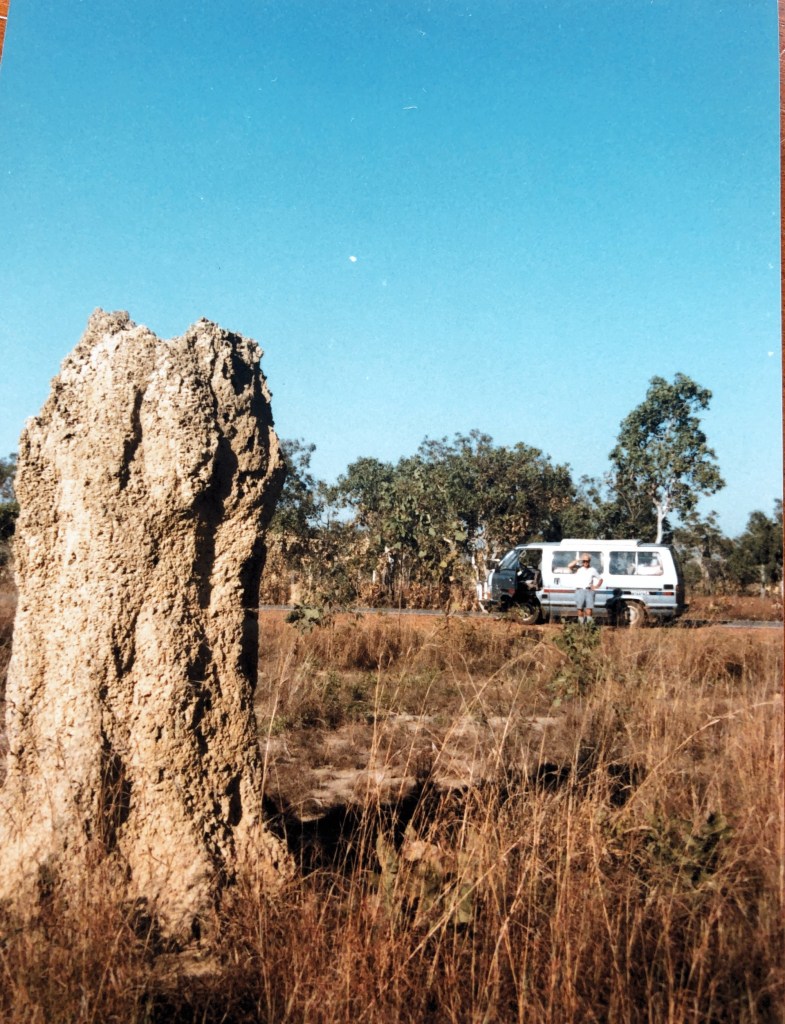
During 1980s Margaret and Marcel owned a van, dubbed ‘the Travelling Van’ by their grandchildren, which had beds and a kitchenette in the back. They made several trips to Darwin to visit their daughter Janet and their grandchildren Katrina and Guy, went on extensive trips with them from Darwin to Victoria in the van.
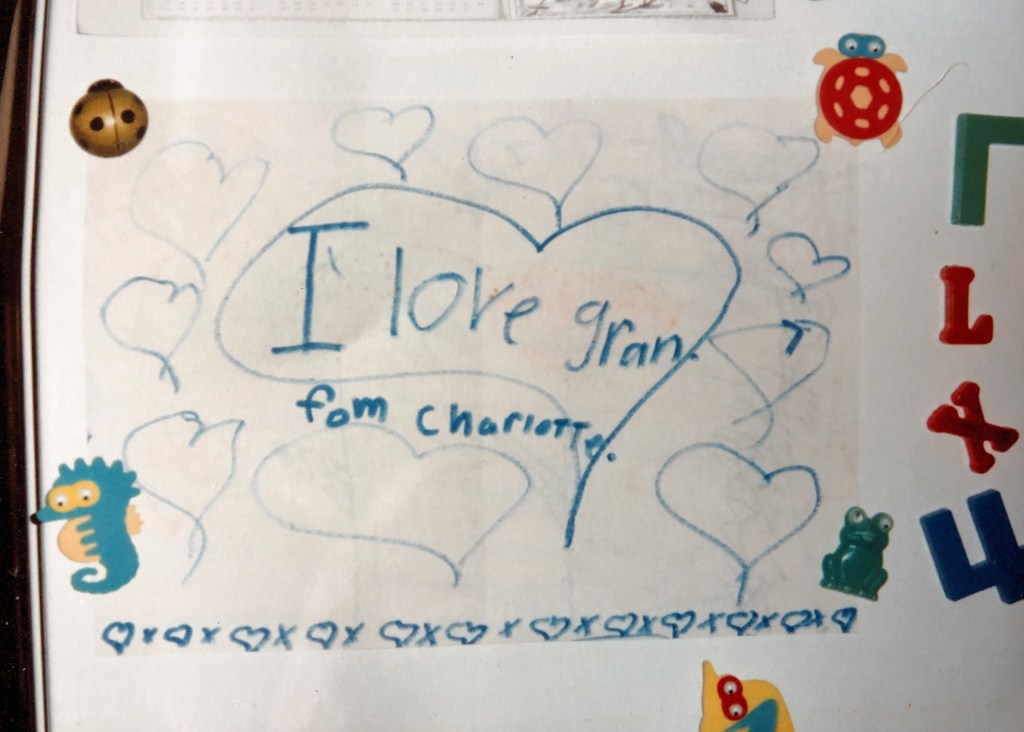
Margaret adored her grandchildren and they adored her.
In 2000 Margaret and Marcel decided to sell Smith’s Lake. Margaret felt isolated from her children and grandchildren and as she and Marcel aged they felt that Smith’s Lake was too far from shopping and medical facilities. They puchased a property in at 196 High Street East Maitland, near Newcastle.
Marcel died in October 2009, two months after their fifty ninth wedding anniversary. Margaret was ninety-one when he died and for the first time in her life she found herself living on her own, and she struggled with it. She began to withdraw from things; she stopped going to the computer to manipulate photographs, stopped doing folk art, and in the end even stopped walking two hundred yards to the corner store each morning to buy a newspaper. Her favourite occupation in her last two years in East Maitland was to read fantasy novels, sometimes in the sun on the verandah and sometimes in ‘her’ chair in the corner of the living room.
In 2012, East Maitland was sold and Margaret retreated to a room in Scenic Lodge, Merewether, and Aged Care Facility. A further withdrawal began: at first she watched Songs of Praise on TV each Sunday and went to the dining room for an evening meal; then the TV was no longer turned on, meals were brought to her room and she rarely left her chair. She died on 20 June 2014, two months before her ninety-sixth birthday. In the days before her death she talked of seeing dead relatives in her room.
Margaret was deeply religious all her life. On Sundays in Stroud she would listen to Songs of Praise on the radio, sitting alone under the grape vine at the back of the house, because her religiosity was something that only her youngest son Philip, shared. She always had a smile on her face and rarely revealed her feelings, but this must have been a source of sorrow for her. Her ashes now rest in Woniora Cemetery in Sutherland, in the grave first constructed when her grandfather Richard Davies died in 1934.


Leave a Reply