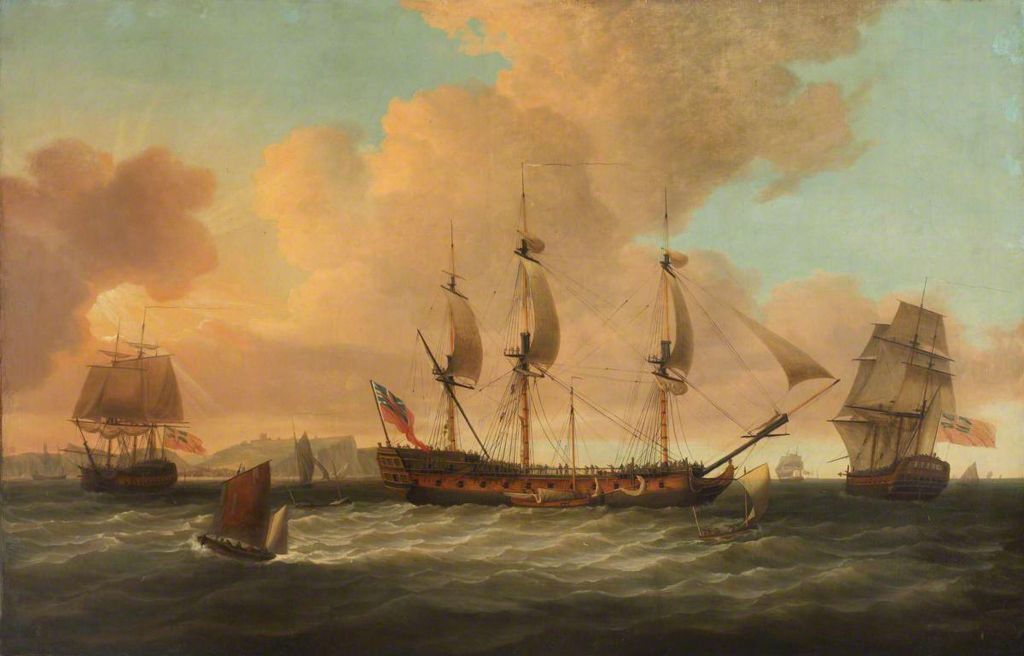
On 28 October 1790 John Warby, 20, and his friend William Deards, 17, both of the Parish of Cottered in Hertfordshire, England, were arrested and charged with stealing two asses. They were convicted of larceny at the Lent Assizes in Hertford on 3 March 1791 and sentenced to seven years transportation.
John was a labourer, probably an agricultural labourer, and he was illiterate, but nothing else is known about his background for certain. Hertfordshire at the time was full of people called Waby (the name recorded when John was arrested), Walbey (the name under which he was transported), Warby (the name assigned to him in the colony) and Worb(e)y (variants occasionally used in the colony). No baptismal record for him has been located although there are some possible candidates, and the identity of his parents is unknown.
John languished in Hertford Goal until 30 May 1791 when he was delivered to the Pitt, an East Indiaman which had been chartered to convey convicts to the New South Wales where the British had established a colony three years earlier. The ship was overcrowded, disease swept through it more than once and the voyage took eight months, but on 14 February 1792 John finally arrived in the large open-air prison which was the colony.
Upon arrival convicts were assigned work. Where John was sent is unknown because many records from the 1790s have not survived but it was probably to one of the government farms, where convicts were creating farmland out of the bush.
On 16 September 1796, while still a convict, John married Sarah Bentley, aged about seventeen, at St John’s Anglican Church in Parramatta. Sarah was from Highgate near London. She had also been sentenced to seven years transportation for theft and had arrived on the Indispensible on 30 April 1796. She bore their first child, Edward in 1800 and would go on to have another thirteen children: William (1801), Elizabeth (1802), John Junior (1803), Ben (1805), Sarah Junior and Jane (1806), Charles (1810), Mary (1813), Robert (1814), Eliza (1815), James (1817), Joseph (1818) and Richard (c.1821).
John’s sentence expired on 3 March 1798 and in 1801 he purchased a fifty acre farm at the foot of Prospect Hill from the man who had been granted the land by Governor Phillip in 1792 but who was either not cut out for farming or had got into debt, a not uncommon plight for men who fell prey to the tempations of drink or gambling.
John’s farm was located on land which had until only a short time before been occupied by the original inhabitants of the country, then called the Natives and later called Aborigines, Aboriginals and more recently First Nations people. The British had pushed them aside so that they could establish farms and they did not accept their dispossession quietly. Conflict between the Darug and the settlers in the Prospect Hill/Parramatta area was ongoing from the time John arrived in the colony until about 1805, when Darug gave up resisting the better armed settlers and either found a way to live among them or moved further away.
John’s descendants are of course troubled by what occurred two hundred and twenty years ago but it would be naive to suppose that it troubled John. Everthing suggests that he was a kind man and he is known to have befriended some members of the local tribes, but he would have shared the view of his contemporaries that the Natives were a primitive people who would benefit from being brought to civilization by the British and learning to become farmers.
John worked hard to develop his farm and he was helped by the fact that as emancipist he could apply to have convicts assigned to him. He also had an adventurous streak. He ventured onto the Cumberland Plain, a vast area south west of Prospect Hill, and as a result he became involved in an expedition by Ensign Francis Barrallier in 1802 to try and find a way across the Blue Mountains and in an expedition by the botantist George Caley in August 1806 who attempted to follow in Barrallier’s footsteps. In 1803 he was appointed a Superintendent of the Wild Cattle, a herd descended from cattle which had escaped from Sydney in 1788. The herd had been discovered in 1795 in an area on the southern edge of the Cumberland Plain which was subsequently named The Cowpastures and the rulers of the colony were keen to preserve them in case the colony, which had faced starvation in the early years, again fell on hard times.
Between January 1808 and December 1809 the colony suffered a disturbance when Governor William Bligh was deposed in a coup led by John Macarthur, a former member of the NSW Corp and a notorious racketeer. The usurpers ruled the colony for nearly two years until Lachlan Macquarie arrived from England with a detachment of soldiers and took over.
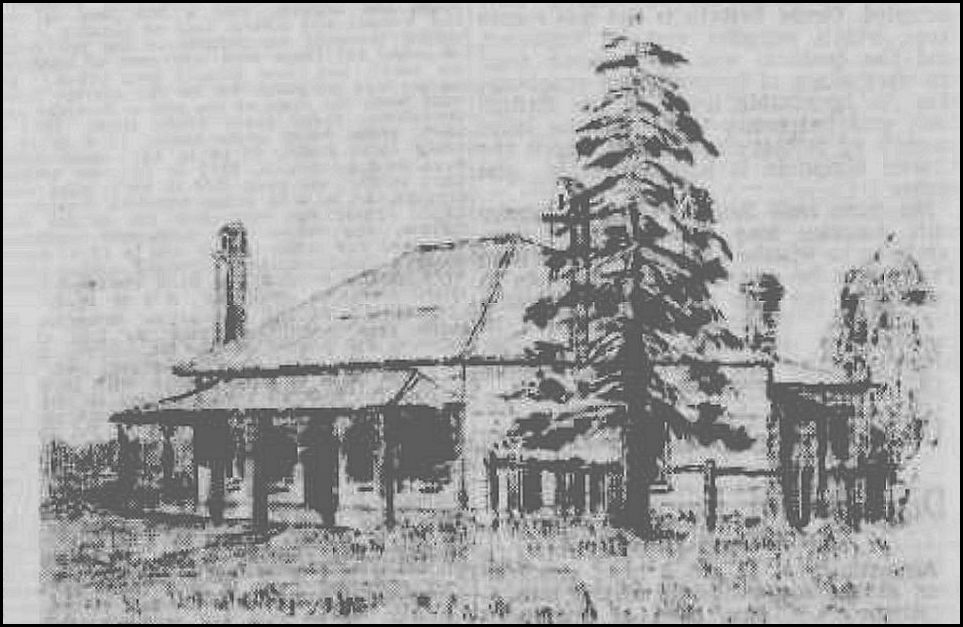
Macquarie’s arrival was followed by twelve years of good government which benefitted hardworking settlers like John. In August 1811 Macquarie granted John two hundred and sixty acres of land in Airds, a new district which he had established on the Cumberland Plain. In 1813 John sold the Prospect farm and in about 1816 he built a home on his new farm which would still be standing in good condition in 1941 and was not finally demolished until 1963.
This expansion of the colony was followed by conflict between the dispossessed Natives and the settlers such as had happened earlier in other parts of the colony, but after about two years the settlers prevailed.
John gradually acquired more land, mainly by purchase, until by the time of the 1828 census he owned nine hundred acres adjoining Campbelltown, the town in Airds which Macquarie had established in December 1820. Over the next thirty years his landholding gradually diminished, mainly as a result of generous gifts made to his children, but when he died on 12 June 1851 he still owned two hundred acres.
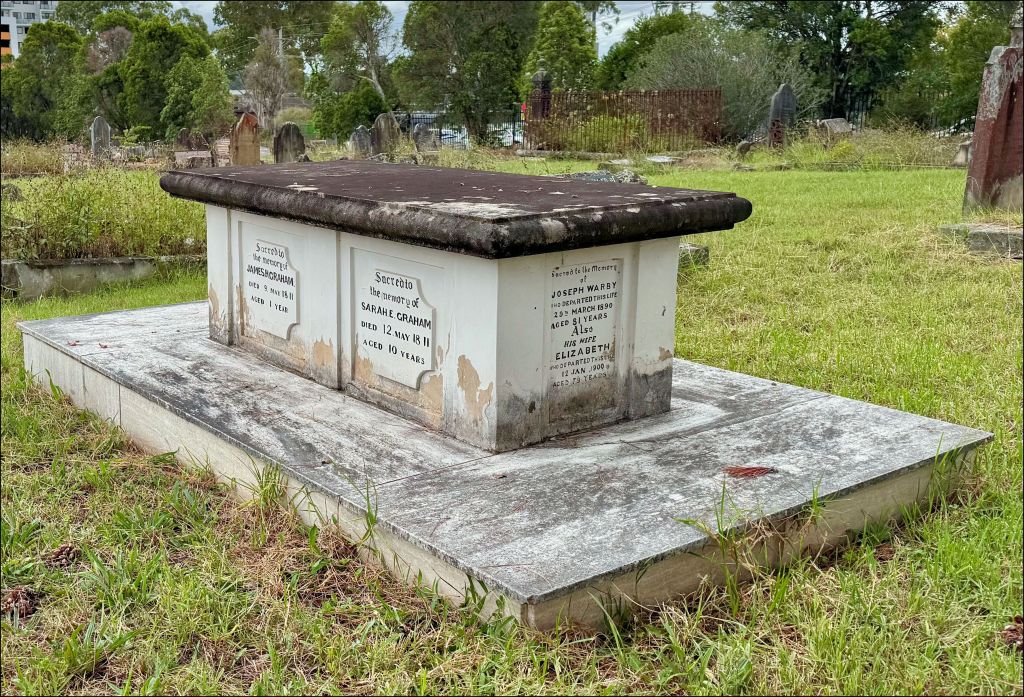
John died a well-respected resident of the Campbelltown district, his convict past largely, although never completely, forgotten. He was buried in St Peter’s Anglican Cemetery in Campbelltown. Sarah survived for another eighteen years, dying at the home of her son Joseph on October 1869 and joining her husband in the family plot, which is now surmounted by a handsome tomb.
Of John and Sarah’s children, Edward died aged four, John Junior died unmarried aged twenty-two and Richard died in infancy but their remaining eleven children grew up and had families, and they have many thousands of descendants in Australia today, not to mention in other parts of the world.
Further reading
Ken Griffin, Transported beyond the Seas, An Alphabetical Listing of Criminals prosecuted in Hertfordshire who reeived transportation sentences to Australia, 1784-1866, Special Publication No. 1, Hertfordshire Family & Population History Society, 1997. Out of print.
Michelle Vale, Warby, My Excellent Guide, self-published, Adelaide, South Australia, 1994. Out of print. Copies available in the National Library of Australia and some local libraries such as Campbelltown Library, Campbelltown, New South Wales.
J Houtzaager, Sarah’s Journey, self-published, 2026. Available on Amazon in print and kindle versions.
Further work
Collaberation between Warby descendants who have done DNA testing may help to establish the identity of John’s parents. Please contact me if you are interested in attempting it.


Leave a Reply