It is difficult to reconcile the description of Thomas Terry in the Newgate Prison Registers in 1810 with the description of him in his Application for a Conditional Pardon in 1821. In the Registers he is described as a person of ‘Notorious Bad Character.’ In the endorsement on his Application for a Conditional Pardon he is described as ‘an honest, sober and industrious man.’
Did he change, or was he maligned and even wrongly convicted in 1810?
Thomas was only 18 when he and Robert Francis, 19, stood trial at the Old Bailey on 31 October 1810 charged with housebreaking. Witnesses said that they had seen Francis remove a pane of glass from the window of a London linen-draper’s shop and extract handkerchiefs and that Thomas was standing nearby. When the pair were arrested and searched each was found to be carrying a knife with the edges filed down which the constable said was used in this type of crime.
Somewhat brazenly given the strong eyewitness evidence against him Francis claimed that he was innocent. Thomas had nothing to say and neither called any character witnesses. They were both convicted and sentenced to death.
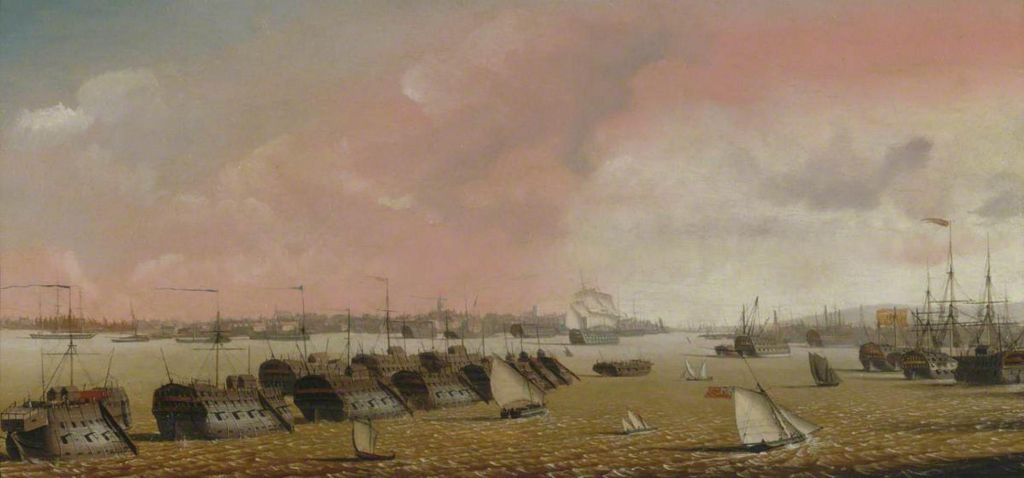
In March 1811 Thomas’s sentence was transmuted to transportation for life. After spending time on a Prison Hulk he was transported to New South Wales on the Guildford. Upon its arrival in January 1812 he was sent to John Drummond and William Guise as a servant.
Unlike many convicts who could not settle to their new life and ran away from their masters and committed further crimes, Thomas never set a foot wrong. He stayed with Drummond and Guise until 1818 when he obtained a Ticket of Leave which allowed him to work on his own account. He married, had three children and began farming in a small way. In 1821 he applied for and was granted a Conditional Pardon. His behaviour continued to be exemplary until his sudden death in 1823 at the age of thirty.
There can be little doubt from reading the transcript of the trial that Thomas was in league with Francis and was not simply in the wrong place at the wrong time. So he did change, but why? Perhaps being sentenced to death had a salutary effect on him; perhaps Governor Macquarie’s little talk to newly arrived convicts about the benefits of good behaviour had an impact; or perhaps it was simply that conditions in the colony, where he was assured of food, lodgings and employment as long as he was obedient removed any need to offend and brought out the best in him. Whatever the reason I am proud to have this ancestor in my family tree.
References
Newgate Prison Registers, 6 November 1810, entry for Thomas Turvey, Home Office, England & Wales, Crime, Prisons & Punishment, 1770-1935, HO 26, Piece 16, FindMyPast.com.
Application for a Conditional Pardon, Thomas Terry, Colonial Secretary’s Papers 1788-1825, State Archives of NSW, INX-99-127904.
Old Bailey Proceedings Online, October 1810, trial of Robert Francis, Thomas Turvy , t18101031-67, Old Bailey Proceedings Online website, version 9, autumn 2023, http://www.oldbaileyonline.org.
 Exploring the past
Leave a comment